
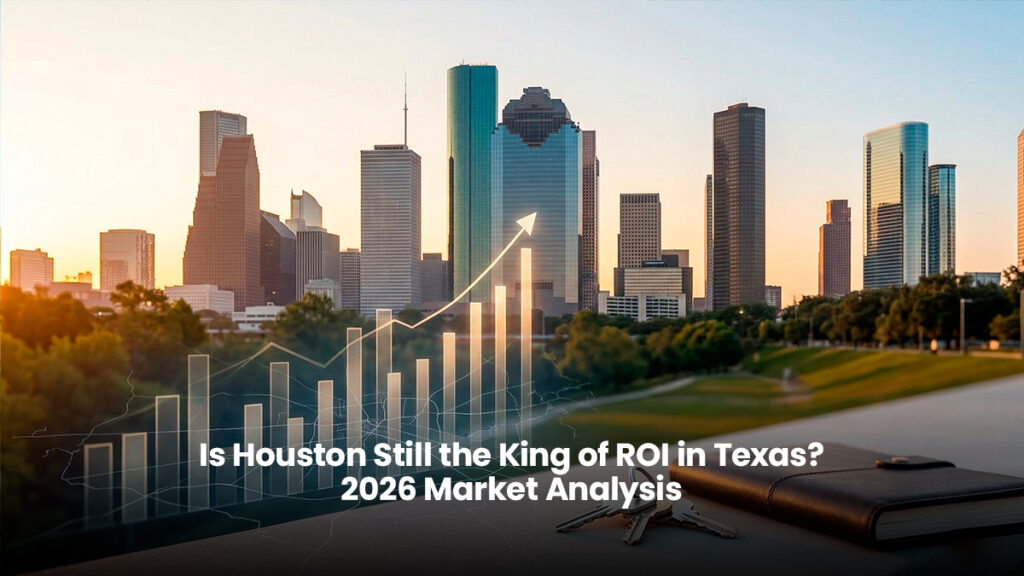
As we cross the first quarter of 2026, the Texas “Big Four” — Houston, Austin, Dallas, and San Antonio — continue to be the talk of the nation. However, for investors and homebuyers looking for the elusive balance between affordability and high-yield returns, one question looms large: Does Houston still hold the crown for profitability?
I’m Aida Villalobos, and today we are stripping away the hype to look at the hard data defining our local landscape this year.
The 2026 Landscape: Stability Over Speculation
While the “tech-boom” volatility significantly impacted markets like Austin and Dallas over the last 24 months, Houston has emerged as the stabilizing force of the Texas economy. In 2026, we are seeing a “return to fundamentals.”
Median Price Advantage: As of early 2026, Houston’s median home price hovers around $335,000. Compare that to Austin’s $435,000 or Dallas’s $375,000, and the entry barrier remains significantly more attractive for portfolio diversification.
Inventory Health: We are currently seeing a 5.4-month supply of inventory in the Greater Houston area. This creates a “Balanced Market” — a rare window where buyers have negotiation leverage without the stagnation seen in other national metros.
Houston vs. The Rest of Texas: The Yield Gap
Profitability isn’t just about the purchase price; it’s about what stays in your pocket.
| Metro Area | Avg. Price Appreciation (2026 Proj.) | Property Tax Impact (Effective) | Rental Yield Potential |
| Houston | 3.5% – 5% (Sustainable) | Moderate (~1.9%) | High (Single-family focus) |
| Austin | 1% – 3% (Recovering) | High | Lower (Price-to-rent ratio) |
| Dallas | 2% – 4% | Moderate | Moderate (High competition) |
Houston’s secret weapon in 2026 is its economic diversity. We are no longer “just an oil town.” With the massive expansion of the Texas Medical Center, the aerospace boom, and the new AI infrastructure hubs in the Energy Corridor, the tenant pool is high-income, stable, and growing.
2026 “Hot Zones”: Where the Profit Is Hiding
If you are looking for appreciation and high rental demand this year, my data-backed recommendations focus on three specific corridors:
The Northwest Growth (Cypress & Tomball): These areas continue to explode due to top-tier school rankings and the completion of major infrastructure projects along the Grand Parkway.
The “Medical Center Effect” (Pearland & Medical Center South): With health care professionals seeking proximity, these areas are seeing the lowest vacancy rates in the city.
The New Suburbs (Fulshear & Richmond): Master-planned communities here are the 2026 stars for new construction, offering builder incentives that are effectively “instant equity” for early buyers.
Conclusion
Is Houston still the capital of profitability? Yes.
While other Texas cities offer “flashy” appreciation spikes, Houston offers resilience. In 2026, profitability is defined by cash flow and steady, sustainable growth. Houston provides a price-per-square-foot value that Dallas and Austin simply cannot match, backed by a job market that is currently outperforming the national average.
Looking to invest or relocate in 2026?
The market is nuanced, and “buying the zip code” is no longer enough—you need to buy the right asset.
Would you like me to send you my curated list of “Top 5 Investment-Ready Properties” currently on the Houston market?
Contact me today:
📩 @realtor.aidavillalobos
📞(346) 955-1049
📍 Houston, Texas.