
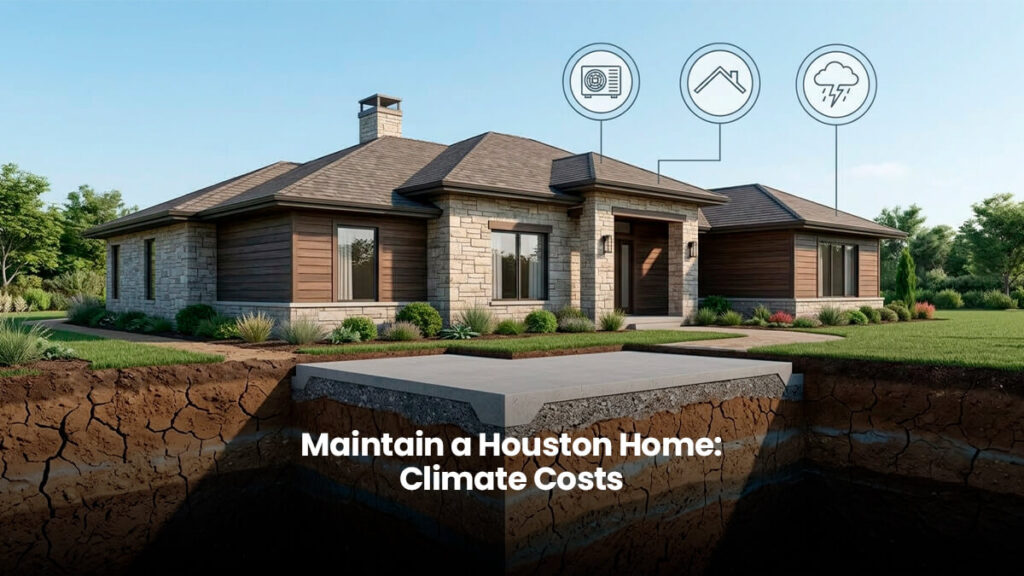
Maintaining a home in Greater Houston requires an estimated annual budget of 1% to 3% of your property’s market value (typically $3,500 to $8,000+ per year) strictly dedicated to climate-driven upkeep. The region’s intense sub-tropical weather—characterized by 100°F+ summer heat, high atmospheric humidity, expansive “black gumbo” clay soil, torrential rainfall, and severe freezing events—places elevated wear on residential foundations, HVAC systems, roofing, and exterior drainage. Proactive preventative care directly preserves property equity and prevents costly transaction delays during home appraisals.
Why Climate-Driven Home Maintenance Matters in Greater Houston
As a licensed real estate professional serving buyers, sellers, and investors across Greater Houston—from The Heights and Memorial to Katy, Sugar Land, Cypress, and Woodlands—I consistently remind my clients that buying a home is only the first step. Protecting your long-term equity requires understanding our region’s specific environment.
Houston features a humid subtropical climate influenced heavily by the Gulf of Mexico. According to official historical climate records from the National Weather Service – Houston/Galveston, the region averages over 50 inches of rainfall annually alongside prolonged periods of summer heat exceeding 95°F–100°F.
These environmental extremes impact physical building components differently than in temperate real estate markets. When I inspect homes alongside licensed inspectors, the most frequent repair negotiation items stem directly from deferred weather maintenance.
Primary Climate Factors & Cost Breakdown for Houston Property Owners
1. Foundation Soil Hydration & Repair Costs
The Greater Houston area predominantly sits on highly expansive clay soil, commonly called “black gumbo.” This soil type expands significantly when saturated with water and contracts during hot, dry spells. This constant shifting subjects concrete slab foundations to immense pressure.
Preventative Maintenance: Installing foundation watering systems (soaker hoses on timers) and maintaining consistent perimeter moisture balance.
Average Cost: $200–$500 for soaker hose/drip system installation.
Repair Costs: If neglected, structural foundation leveling or underpinning using concrete or steel piers ranges from $5,000 to $18,000+.
2. HVAC Systems & Cooling Infrastructure
In Houston, air conditioning is a critical home infrastructure component rather than a luxury. HVAC units operate continuously from April through October to manage both ambient temperature and internal relative humidity.
Expected Lifespan: 10 to 14 years in Houston (compared to 15 to 20 years in drier/cooler states).
Annual Tune-Ups & Coil Cleaning: $150–$350 per year.
System Replacement: $7,500–$16,000 per zone (depending on SEER2 rating and ductwork repairs).
Energy Consumption: High humidity forces units to work harder; residents utilizing energy management guidance from CenterPoint Energy Efficiency Programs can optimize operating efficiency during peak demand days.
3. Roof System Resilience, Gutters & Storm Drainage
Houston experiences frequent high-wind thunderstorms, hail, tropical depressions, and direct hurricane risks. Intense ultraviolet (UV) radiation accelerates the deterioration of standard asphalt shingles.
Roof Inspection & Flashing Repairs: $300–$750 annually.
Complete Roof Replacement: $9,000–$22,000 depending on square footage and roof pitch.
Gutter Cleaning & Leaf Guards: $200–$500 per year to keep rainwater flowing away from your foundation.
4. Humidity Control, Drainage & Mold Prevention
Relative outdoor humidity levels frequently surpass 80–90%. Excess moisture leads to exterior rot, window seal failures, and indoor micro-organism growth if ventilation systems are compromised.
Whole-Home Dehumidifier Installation: $2,500–$4,500.
Exterior Drainage Solutions (French Drains, Catch Basins): $1,800–$6,500 depending on yard size and grading needs outlined by local municipal standards such as the City of Houston Drainage & Flood Operations.
Houston Climate Maintenance Cost Overview Table
| Maintenance Category | Primary Climate Threat | Annual Preventative Cost | Major Repair / Replacement Cost | Impact on Property Resale Value |
| Foundation Care | Expansive Clay Soil (Shrink/Swell) | $200 – $500 | $5,000 – $18,000+ | Critical (Unrepaired issues block buyer financing) |
| HVAC Systems | Severe Heat & Excessive Humidity | $150 – $350 | $7,500 – $16,000 | High (Older units reduce buyer offer prices) |
| Roofing & Flashing | UV Radiation, Hail & High Winds | $300 – $750 | $9,000 – $22,000 | High (Directly impacts insurance approval) |
| Exterior Drainage | Torrential Downpours & Flooding | $200 – $600 | $1,800 – $6,500 | Very High (Protects against standing water & rot) |
| Tree Trimming | Tropical Storm Winds & Branches | $400 – $1,200 | $2,500 – $8,000 (Property Damage) | Medium (Prevents catastrophic structural damage) |
| Pipelining & Freeze Prep | Winter Deep Freezes (Polar Vortex) | $50 – $200 | $4,000 – $15,000 (Water Damage) | High (Prevents emergency pipe bursts) |
Seasonal Maintenance Checklist for Houston Homeowners
Spring & Summer Checklist (March – August)
Inspect HVAC Drain Lines: Clear condensate lines with vinegar or specialized tablets every 30 days to prevent interior ceiling leaks.
Set Up Foundation Soaker Hoses: Position hoses 12–18 inches away from your foundation and run them 2–3 times per week during dry summer months.
Check Roof Shingles & Flashing: Schedule a professional visual assessment to spot lifted shingles before hurricane season peaks in August/September.
Clean Exterior Drainage: Ensure swales, catch basins, and French drain outlets are free of soil build-up and organic debris.
Fall & Winter Checklist (September – February)
Trim Tree Canopy: Cut back heavy overhanging branches within 10 feet of your roofline to prevent windstorm damage.
Insulate Hose Bibs & Outdoor Pipes: Purchase foam covers and pipe insulation ahead of hard freeze warnings (typically December through February).
Seal Windows & Exterior Doors: Re-caulk exterior penetrations to keep humid air outside and reduce heating/cooling envelope loss.
Review Homeowner & Flood Insurance: Review your policy limits against guidance from the Texas Department of Insurance to confirm proper coverage for windstorm, hail, and flood damage.
How Climate Maintenance Impacts Resale Value & Appraisals
In my work helping clients position their properties for maximum market return, I regularly see two identical floor plans sell for vastly different prices based entirely on mechanical and structural condition.
+-----------------------------------------------------------------+
|               PROACTIVE CLIMATE MAINTENANCE                     |
|  - Active foundation watering  - Annual HVAC servicing          |
|  - Clean gutters & drainage    - Insured roof & freeze prep     |
+-----------------------------------------------------------------+
                                |
                                v
+-----------------------------------------------------------------+
|               FINANCIAL & REAL ESTATE BENEFITS                  |
|  * Higher Appraisal Valuations  * Faster Closing Timelines      |
|  * Clean Home Inspection Reports * Maximum Seller Equity Return |
+-----------------------------------------------------------------+
When prospective buyers order home inspections, deferred weather maintenance items lead to long repair lists, price concession requests, or canceled contracts. Keeping meticulous receipts of your annual HVAC services, roof inspections, and foundation management proves to buyers and appraisers that your home has been preserved against Houston’s challenging environment.
FAQ
How much should I budget annually for home maintenance in Houston?
You should budget between 1% and 3% of your home’s total market value per year. For a $400,000 home in Greater Houston, this equals $4,000 to $12,000 set aside annually for routine upkeep, HVAC servicing, roof upkeep, and climate-related repairs.
Why do Houston home foundations crack, and how can I prevent it?
Houston foundations move because the surrounding soil consists of expansive clay that swells when wet and shrinks when dry. You can prevent structural cracking by keeping the moisture level around your slab consistent year-round using soaker hoses placed 12 to 18 inches from the foundation edge during dry periods.
How long does an air conditioner last in Houston, Texas?
An air conditioning unit in Houston typically lasts 10 to 14 years. Because systems operate for up to 8 months continuously due to high heat and humidity, their lifespan is shorter than the national average of 15 to 20 years. Regular spring tune-ups help extend system life.
Is flood insurance necessary for homes in Houston not in a designated flood zone?
Yes. Over 20% of flood insurance claims in the Houston area originate from properties located outside high-risk, designated 100-year flood zones. Surface water runoff from extreme rainfall can cause localized street flooding across Harris, Fort Bend, and Montgomery counties regardless of official flood plain designations.
How does Houston weather affect home insurance rates?
Houston’s vulnerability to hail, high-wind thunderstorms, and tropical weather drives higher property insurance premiums. Maintaining a newer roof, adding hurricane straps, and installing storm shutters can help qualify your home for policy discounts with major insurance carriers in Texas.
Protect Your Investment with Expert Real Estate Guidance
Navigating homeownership in Greater Houston requires local knowledge and a proactive strategy. Whether you are preparing to list your property for sale, evaluating the structural health of a potential home purchase, or seeking trusted local vendor recommendations, I am here to serve as your dedicated real estate advisor.
Contact me today for a comprehensive home market evaluation or personalized buyer consultation!
Aida Villalobos | Agente inmobiliaria
📞(346) 955-1049 / @realtor.aidavillalobos