
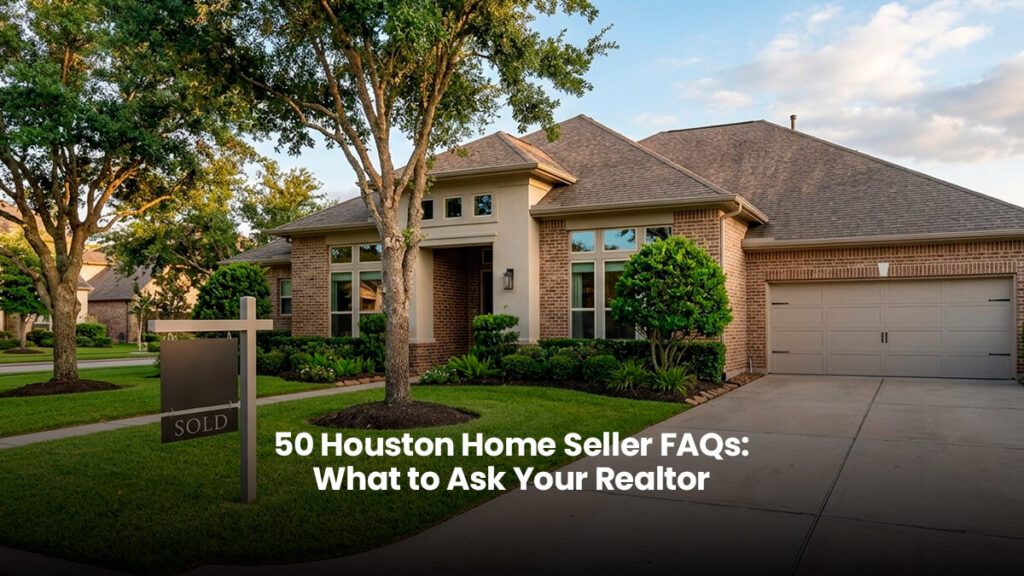
Selling a home in the Greater Houston area is both an exciting financial milestone and a complex process. From understanding hyper-local neighborhood pricing and Municipal Utility District (MUD) tax obligations to navigating Texas Real Estate Commission (TREC) contracts, having the right guidance makes all the difference.
As a licensed Houston Realtor, I have answered hundreds of questions from homeowners looking to maximize their net equity while minimizing stress. To help you navigate your home sale with confidence, I have put together the ultimate list of 50 home seller FAQs, complete with real-world advice tailored specifically to our local Houston market.
Section 1: Preparing & Pricing Your Houston Home
1. How do you determine the listing price of my home in Houston?
I perform a comprehensive Comparative Market Analysis (CMA) analyzing recent sales, active listings, and pending contracts in your specific subdivision—whether you are in Katy, Cypress, The Woodlands, or Inner Loop Houston.
2. How does the current Houston housing market impact my sale?
Market conditions dictate buyer competition and pricing power. You can track broader regional market trends and data through the Texas Real Estate Research Center to see how inventory levels impact local home values.
3. Should I hire an inspector before putting my home on the market?
A pre-listing inspection helps identify structural, roof, or HVAC issues upfront, allowing us to address them before a buyer’s inspector finds them during options periods.
4. What repairs offer the highest return on investment (ROI) in Houston?
Fresh neutral paint, updating cabinet hardware, modernizing light fixtures, and enhancing curb appeal generally deliver the highest ROI without over-capitalizing.
5. Is professional home staging necessary?
Staging helps buyers envision themselves living in the space. Staged homes in the Houston area consistently sell faster and often command higher offers than non-staged properties.
6. What is the Seller’s Disclosure Notice, and why is it mandatory in Texas?
Texas law requires sellers to disclose known material defects about the property’s condition. Honesty protects you legally after the transaction closes.
7. How do I handle disclosures regarding past flooding or water damage?
Full transparency is critical. We disclose past water intrusion, repairs completed, and mitigation efforts to build trust with potential buyers.
8. What are MUD taxes, and how do they affect my sale?
Municipal Utility District (MUD) taxes cover local infrastructure like water and drainage. Buyers evaluate total tax rates when making offers, so having clear MUD disclosures ready is vital.
9. Should I replace my roof before selling?
If your roof is near the end of its life or shows storm damage, replacing it—or filing an insurance claim—can prevent buyer financing issues.
10. How do Houston property tax assessments affect my listing strategy?
You can review your county tax records via the Harris Central Appraisal District (HCAD) or neighboring county appraisal sites. While tax values differ from market values, buyers will review your annual tax burden.
Section 2: Houston Market Dynamics & Timing
11. When is the best time of year to sell a home in Greater Houston?
Spring and early summer are traditionally peak seasons due to school calendars, but Houston’s strong job market creates year-round demand.
12. How long does it typically take to sell a house in Houston?
Days on market vary by neighborhood and price point. Properly priced homes in desirable subdivisions often receive offers within 14 to 30 days.
13. How does location within Houston impact property values?
Proximity to major employment hubs (Energy Corridor, Texas Medical Center, Downtown), school districts, and flood zones heavily influence home value.
14. Should I price my home higher to leave room for negotiation?
Overpricing often leads to stagnant listings. Pricing competitively from day one attracts maximum buyer attention and can trigger multi-offer scenarios.
15. What is a “CMA” and how does it differ from a tax appraisal?
A CMA measures actual market value based on recent sales of similar homes, whereas a tax appraisal is generated by the county for taxation purposes.
16. How do interest rate fluctuations impact local buyer demand?
Higher interest rates reduce buyer purchasing power, making accurate pricing and aggressive strategic marketing even more critical.
17. Can I sell my home while it is currently rented to tenants?
Yes, but showings must be coordinated carefully with tenants, and lease agreements must be disclosed to potential buyers.
18. What happens if my home doesn’t receive offers in the first two weeks?
We review market feedback, showing activity, online views on platforms like the Houston Association of REALTORS® (HAR), and adjust pricing or staging accordingly.
19. How do HOA restrictions impact my home sale?
Buyers will review HOA rules, monthly or annual fees, and transfer fees during their option period, so having HOA documents ready is essential.
20. Does neighborhood development affect my listing?
Yes, upcoming commercial developments, highway expansions, or new school construction can positively or negatively influence buyer demand.
Section 3: Marketing, Staging & Showings
21. How will my property be marketed to qualified buyers?
I utilize targeted digital campaigns, social media ads, high-definition video tours, professional photography, and syndication across major real estate search portals.
22. Why are professional photos so important for online search engines?
Over 90% of home searches start online. High-quality imagery ensures your property stands out in web searches and AI-driven recommendations.
23. Should I host open houses?
Open houses increase property exposure, generate local neighborhood interest, and allow prospective buyers to experience the home firsthand.
24. How should I prepare my house for showing appointments?
Keep spaces decluttered, remove personal items, ensure bright lighting, set the thermostat comfortably, and secure pets away from living spaces.
25. Should I be present during buyer showings?
No. Buyers feel more comfortable speaking candidly with their agent when the homeowner is not present.
26. How do you filter out unqualified prospective buyers?
We require buyers’ agents to provide a pre-approval letter from a reputable lender or proof of funds before submitting an offer.
27. What is a lockbox and is my property safe?
Electronic lockboxes log agent credentials and access times, ensuring only licensed professionals access your home.
28. How does digital placement on local sites like HAR benefit my home?
Listing on regional MLS platforms guarantees maximum visibility among local realtors and active home shoppers across Greater Houston.
29. Can virtual tours replace in-person showings?
Virtual tours act as an initial filter, attracting serious out-of-town buyers moving to Houston before they schedule an in-person visit.
30. How do you handle feedback from showing appointments?
I systematically gather feedback from visiting agents to identify patterns regarding price, condition, or presentation.
Section 4: Offers, Texas Contracts & Negotiations
31. What standard contract is used for selling a home in Texas?
We utilize official contracts promulgated by the Texas Real Estate Commission (TREC), primarily the One to Four Family Residential Contract (Resale).
32. What is the Texas Option Period?
The Option Period is a negotiated timeframe (typically 5–10 days) where the buyer pays a fee for the unrestricted right to terminate the contract after inspections.
33. What is earnest money and who holds it?
Earnest money is a good-faith deposit (usually 1–2% of the purchase price) paid by the buyer and held in an escrow account by a neutral title company.
34. How do you evaluate multiple offers on a home?
We compare total purchase price, financing strength, option period length, earnest money amounts, requested concessions, and proposed closing dates.
35. What are seller concessions?
Concessions are seller contributions toward the buyer’s closing costs, which can help close a deal in competitive market conditions.
36. Can I accept a backup offer while under contract?
Yes, a formal Texas Backup Addendum allows you to secure a secondary buyer if the primary contract terminates during the option period.
37. What happens if the buyer’s appraisal comes in lower than the agreed price?
We can negotiate a price adjustment, require the buyer to bring cash to cover the appraisal gap, or terminate the contract per the Financing Addendum.
38. Are verbal agreements binding in Texas real estate?
No. Under Texas law, real estate agreements must be in writing and signed by all parties to be legally enforceable.
39. What is a pre-approval letter versus a pre-qualification letter?
A pre-approval letter indicates that a lender has verified the buyer’s financial documents, making their offer significantly stronger.
40. Can a seller cancel a real estate contract in Texas?
Sellers have very limited rights to cancel once a contract is signed, unless the buyer defaults on contract terms or contingencies.
Section 5: Inspections, Closing Costs & Final Steps
41. What repairs am I legally required to make after an inspection?
In Texas, sellers are generally not legally obligated to make repairs unless specified in the contract, but repairs are often negotiated to keep the deal moving forward.
42. What costs are sellers responsible for at closing?
Sellers typically pay real estate commissions, title policy fees, tax prorations, document prep fees, and outstanding mortgage payoffs.
43. What is a Seller Net Sheet?
A Seller Net Sheet is an estimated financial breakdown showing your projected net proceeds after deducting all closing costs and debt payoffs.
44. How are property taxes prorated at closing?
Because Texas property taxes are paid in arrears, the seller credits the buyer for taxes owed from January 1st up to the day of closing.
45. What is the role of the title company in Texas?
The title company conducts title searches, issues title insurance, holds escrow funds, and facilitates the final signing and funding of the transaction.
46. What is a survey and who pays for it?
A survey outlines property boundaries and structures. The contract dictates whether the seller provides an existing survey or if a party purchases a new one.
47. When do I receive the funds from my home sale?
Funds are disbursed once both buyer and seller have signed all documents and the lender has officially funded the loan (typically the same day or next business day).
48. When do I need to vacate the home after closing?
Unless a Seller’s Temporary Residential Lease is negotiated, the seller must hand over keys and fully vacate the property upon closing and funding.
49. How do I transfer utilities when selling my Houston home?
Utilities should remain active through the closing date and be scheduled for transfer or disconnect the business day immediately following funding.
50. Why should I hire a local Houston Realtor instead of selling myself?
Navigating local market pricing, TREC contract compliance, strategic marketing, and skilled negotiation requires localized experience. Working with an expert protects your equity and ensures a seamless transaction from start to finish.
Ready to Sell Your Houston Home with Confidence?
Selling your home is a major financial decision, and having a dedicated local expert in your corner makes all the difference. Whether you are selling in Katy, Sugar Land, Cypress, or Inner Loop Houston, I am here to guide you through every step of the process.
Have questions about your home’s current market value? Reach out to me today for a customized marketing strategy and personalized property evaluation!
Aida Villalobos | Real Estate Broker
📞(346) 955-1049 / @realtor.aidavillalobos