
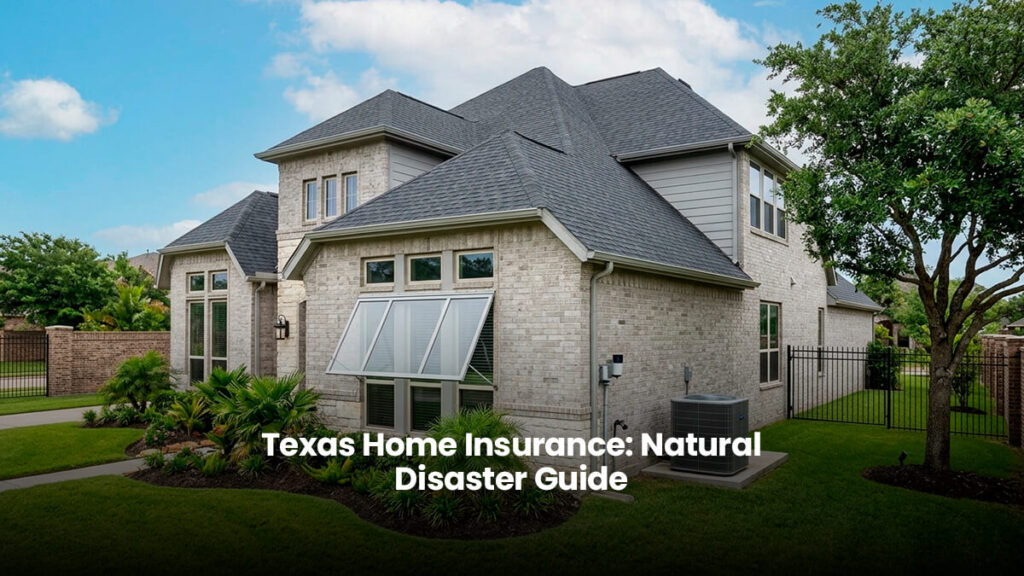
As a real estate professional working here in the Greater Houston area, I get to help families find their dream homes every single day. Our local neighborhoods boast beautiful architecture, thriving local economies, and unmatched cultural diversity. However, falling in love with a home in Texas means accepting our unique environment. From intense summer hailstorms and severe winter freezes to massive coastal hurricanes, our homes face a gauntlet of natural risks.
Navigating the complex world of property insurance can feel overwhelming, especially with shifting premium rates across the state. That is why I put together this comprehensive, fidedign guide. My goal is to empower you to look past the monthly premium cost and understand exactly what protections your home has when disaster strikes. Positioning yourself securely today prevents financial catastrophes tomorrow.
The Anatomy of a Standard Texas Homeowners Policy
To understand what you are missing, we first need to look at what you actually have. A standard Texas homeowners policy—typically written on an HO-3 or equivalent form—is designed around a few core pillars of financial protection.
Dwelling Coverage: This is the bedrock of your policy. It pays to repair or entirely rebuild the physical structure of your home, including your walls, roof, foundation, and attached structures like garages, if they are damaged by an event your policy explicitly covers.
Personal Property Coverage: This protects the contents inside your home. Your furniture, clothes, electronics, and appliances are covered up to a specific limit if they are stolen, damaged, or destroyed by a covered peril.
Liability Protection: If a guest is injured on your property and files a lawsuit, or if you accidentally cause damage to someone else’s property, this coverage steps in to handle legal defenses and settlements, protecting your personal savings from liquidation.
Additional Living Expenses (ALE): Also known as Loss of Use, this is a lifesaver after a major disaster. If a severe storm renders your home temporarily unlivable, ALE covers your hotel stays, temporary rental homes, and increased restaurant meal costs while your property undergoes reconstruction.
While these pillars sound complete, Texas is a unique regulatory environment. Most insurance companies determine your premiums based on your home’s age, construction materials (brick vs. wood framing), and your exact geographical location. Because our local weather risks are higher, Texas homeowners premiums are among the highest in the country. To ensure you are truly protected, we must analyze the gaps where standard policies fall completely short.
The Dangerous Gaps: What Your Standard Policy Leaves Out
The most dangerous assumption a homeowner can make is that “fully insured” means covered for everything. In Texas, some of our most frequent and devastating natural hazards are explicitly excluded from standard policies.
The Absolute Flood Misconception
Let me be completely direct here: standard homeowners insurance does not cover flood damage. If a tropical storm stalls over Harris County and pushes water through your front door, a standard policy will pay zero dollars for your ruined floors, walls, or furniture.
Water damage is only covered under a standard policy if it originates from within the house, such as a suddenly burst pipe. For rising surface waters, you must secure a separate flood insurance policy. You can obtain this through the National Flood Insurance Program (NFIP), managed by FEMA, or through a growing private flood insurance market. Even if your lender does not legally require it because you live outside a high-risk flood zone, remember that heavy Texas downpours can flood almost any property.
The Complex World of Wind and Hail Deductibles
In many states, homeowners pay a flat deductible, like $1,000, before insurance covers a claim. In Texas, insurance companies manage their heavy storm risks by implementing separate, percentage-based deductibles specifically for wind and hail damage.
Instead of a flat fee, your wind and hail deductible is usually set at 1%, 2%, or even 5% of your home’s total dwelling coverage limit. For example, if your home is insured for $400,000 and you have a 2% wind/hail deductible, your out-of-pocket expense before your insurance pays for a new roof is $8,000. This catches many buyers off guard after a major hailstorm or tropical event, making it vital to read the fine print of your policy declarations page
Specialized Emergency & Coastal Options: TWIA and the FAIR Plan
If you own property directly along the coast or in areas highly prone to extreme weather, finding affordable coverage on the open private market can be incredibly difficult. Fortunately, the state has structural safety nets designed to keep homeowners protected.
If your property is located in one of Texas’s designated coastal counties, private insurers might exclude windstorm coverage entirely from your policy. In this scenario, you will need to buy separate windstorm coverage through the Texas Windstorm Insurance Association (TWIA). TWIA acts as the insurer of last resort for wind and hail along our coast, ensuring that a hurricane doesn’t leave you financially ruined.
For homeowners inland who are completely denied coverage by traditional insurance companies due to high wildfire risks or past claims history, the state offers the Texas FAIR Plan Association. To qualify for a FAIR Plan policy, you must show that at least two regular insurance companies have declined to insure your home. It provides more limited coverage than a standard policy, but it ensures you maintain the baseline structural protection required to safeguard your investment and satisfy your mortgage lender.
Aida’s Proactive Mitigation Checklist
As your real estate advisor, I always remind my clients that the best way to handle a natural disaster claim is to reduce the damage before it ever happens. Taking proactive structural steps protects your family and can lead to substantial premium discounts with the Texas Department of Insurance (TDI).
Implement FORTIFIED Home Standards: When replacing your roof, instruct your contractor to build to the Insurance Institute for Business and Home Safety (IBHS) FORTIFIED standards. This includes using ring-shank nails, sealed roof decks, and impact-resistant shingles, which can lower your windstorm insurance costs drastically.
Clear Drainage and Gutters: Ensure your gutters, downpouts, and neighborhood storm drains are clear of leaves and debris. Proper drainage routes heavy rainfall away from your foundation, mitigating localized flash flooding risks.
Maintain Your Trees: Trim back dead or overhanging tree branches that loom over your roofline. High winds easily snap these branches, sending them crashing through shingles and ceilings.
Compile a Digital Home Inventory: Download a home inventory application or take a detailed video walk-through of every room in your house, opening closets and drawers. Store this footage securely in the cloud. Having clear, pre-disaster proof of your personal belongings makes resolving an insurance claim infinitely smoother.
Step-by-Step Guide to Filing a Post-Disaster Insurance Claim
If a severe weather event hits your neighborhood and impacts your property, your actions in the immediate aftermath are critical to securing a fair and timely payout from your carrier. Follow this precise chronological sequence to navigate the claims framework effectively:
Report your damage to your insurance company as soon as it is safe to do so. Most Texas policies have strict deadlines, often requiring you to file within one year of the actual date of the storm damage.
Take comprehensive photographs and videos of all structural damage, interior water stains, and ruined personal property before you touch or clean up anything. Do not throw away damaged items until an insurance adjuster inspects them.
Cover broken windows, board up exposed walls, or place a tarp over a compromised roof to protect your home from further weather exposure. Do not make permanent structural repairs yet, and save every single receipt for emergency materials purchased.
Accompany the insurance adjuster during their physical inspection of your home. It is highly beneficial to have your own trusted, licensed general contractor present to discuss repair estimates directly with the adjuster.
By Texas law, your insurance company must acknowledge your claim within 15 days of receipt. Once you provide all requested information, they have 15 business days to formally accept or deny your claim, and they must issue payment within 5 business days of agreeing to a settlement.
Q&A
Does Texas homeowners insurance cover damage from a broken water pipe during a freeze?
Yes, generally. Standard Texas home insurance policies cover sudden and accidental water damage caused by burst plumbing lines, including freezes. However, you must prove that you maintained proper heat inside the home or drained the water lines appropriately if the home was unoccupied. It will not cover the damage if it was caused by long-term, neglected maintenance leaks.
How do I check if a home I want to buy in Houston is in a high-risk flood zone?
You can look up any property’s official flood risk profile using the FEMA Flood Map Service Center or via localized resources like the Harris County Flood Control District mapping tools. When we tour homes together, I provide detailed flood zone data as part of our initial property analysis. Remember to cross-reference these maps with official resources at FEMA and check FloodSmart for comprehensive insurance pricing.
Can a contractor waive my insurance deductible after a major storm in Texas?
No, it is strictly illegal. Under Texas law (House Bill 2102), contractors are completely prohibited from waiving, absorbing, or rebating a homeowner’s insurance deductible. Doing so constitutes insurance fraud. Companies are legally entitled to request proof, such as a paid receipt or bank statement, showing that you paid your full out-of-pocket deductible directly to the contractor performing the repairs.
What happens if my insurance company goes bankrupt after a massive hurricane?
If a licensed Texas property insurance company becomes insolvent following a catastrophic natural disaster, your claims are protected by the Texas Property and Casualty Insurance Guaranty Association (TPCIGA). This state-mandated association steps in to pay covered outstanding claims, typically up to $300,000 per policy, ensuring that homeowners are not left completely stranded without resources.
Conclusion
Protecting your home involves blending smart real estate decisions with a robust asset protection strategy. If you are looking to buy, sell, or simply want a professional assessment of a property’s regional climate risks here in the Houston market, feel free to reach out to me directly. Let’s make sure your single largest financial investment stays safe, sound, and fully covered for the future.
Aida Villalobos | Real Estate Broker
📞(346) 955-1049 / @realtor.aidavillalobos